To meet growing customer and employee expectations, your organization must balance digital innovation and risk. That means rolling out new technology at a pace your organization can actually absorb – because most digital transformation projects fail when the technology outpaces the people and processes behind it.
Key Takeaways
- Digital innovation always carries risk, but delaying it costs SMBs more in lost customers and lost ground to competitors.
- Most digital transformation projects fail because organizations underestimate people and processes.
- Employee error causes the majority of data breaches, so technical training matters as much as the new tools themselves.
- SMBs without in-house IT depth can close both the technology and talent gaps by partnering with an experienced IT provider.

Digital Innovation is Inherently Risky but Necessary
There’s a good reason why so many organizations resist change: innovation is inherently risky. Whenever outdated systems and processes are replaced with modern alternatives, issues can happen, including:
- Temporary instability
- Higher-than-expected expenses
- Heightened exposure to cybersecurity threats
To avoid these and other issues, many organizations delay innovation for as long as possible. Unfortunately, this allows their competitors to get ahead. When that happens, negative reviews often follow, and the loss of customer loyalty is difficult to reverse.
Digital innovation is necessary, but it must be approached properly so it doesn’t create even more risk.
Balancing Digital Innovation and Risk
Organizations worldwide are expected to spend around 4 trillion on digital transformation projects by 2027. Despite that investment, McKinsey’s own research found that only 16% of digital transformations will improve performance and sustain the gains long-term.
Understanding the key traits of successful and unsuccessful digital transformation projects helps you innovate effectively and overcome challenges along the way.

Five Steps to Successful Digital Innovation
1. Set realistic expectations and goals.
Organizations that achieve digital transformation success begin with realistic expectations and well-defined goals. To set achievable targets within a reasonable timeframe and budget, it’s important to avoid focusing solely on the end result.
Instead, assess your current position and map out the entire journey to your desired outcome. This approach ensures you account for the systems, processes, and people that will be impacted by the transformation, enabling a smoother and more effective transition.
Goals & Expectations at a Glance
- Map your starting point and the full path to your goal instead of fixating on the end result alone.
- Account for every system, process, and person the transformation will touch before you set a timeline or budget.
- Realistic goals come from a clear-eyed audit.
2. Have the right mindset.
Resistance to digital innovation can come from both employees and stakeholders – which can make even realistic goals difficult to achieve.
To prevent resistance to change from ruining your plans, your organization should have the right digital transformation mindset. Everyone should view innovation as a positive and essential initiative.
Executives must lead the way by being united and clearly communicating to employees the reasons for the change and the steps needed to achieve it.
Mindset at a Glance
- Treat innovation as essential, starting at the top.
- Executives need a united front and clear, consistent communication about why the change is happening.
- Resistance from employees or stakeholders is normal. Plan for it, instead of ignoring it.

3. Make the right technology choices.
Every part of your organization you transform comes with competing technology options, each with its own strengths and weaknesses.
Choosing the right technology can significantly reduce the risk of business disruption, while the wrong choice can greatly increase it. The best option is the one that fits your needs. So, don’t get distracted by those with the most features.
To make an informed decision, you need a clear understanding of the available technology solutions – a process a trusted IT provider can guide you through.
Tech Choices at a Glance
- Pick the technology that fits your actual needs.
- The wrong choice raises your risk of business disruption; the right one lowers it.
- An experienced IT provider can help you evaluate options you don’t have the internal expertise to judge alone.
4. Help employees increase their technical know-how.
Verizon’s 2026 Data Breach Investigations Report found that 62% of breaches involved the human element.
New tools and infrastructure upgrades raise the risk of data breaches caused by employees. To avoid that issue, you need to train your staff to ensure they have the technical skills they need to be successful.
Employee Training at a Glance
- Employee error causes the majority of data breaches, and that risk climbs whenever you roll out new tools.
- Ongoing training avoids that issue, whereas a one-time onboarding session doesn’t.
- Build employee readiness into your rollout timeline.
5. Get the IT talent you need.
It’s impossible to complete any digital transformation project without IT talent. Seasoned IT professionals bring indispensable skills and experience to the table that can go a long way in steering the project toward success.
Finding that talent is its own challenge, especially for smaller organizations that can’t justify a full in-house IT department.

Unlock the secrets to successfully hiring IT professionals for your small business. Quickly navigate the challenges of identifying the right candidates to support and grow your business effectively.
Talent Acquisition at a Glance
- No digital transformation project succeeds without the right IT talent behind it.
- Smaller organizations often can’t justify a full in-house IT department for one project.
- Co-managed or fully managed IT services closes that gap without the cost of a full internal team.
Resource
Managed Services Buyer's Guide
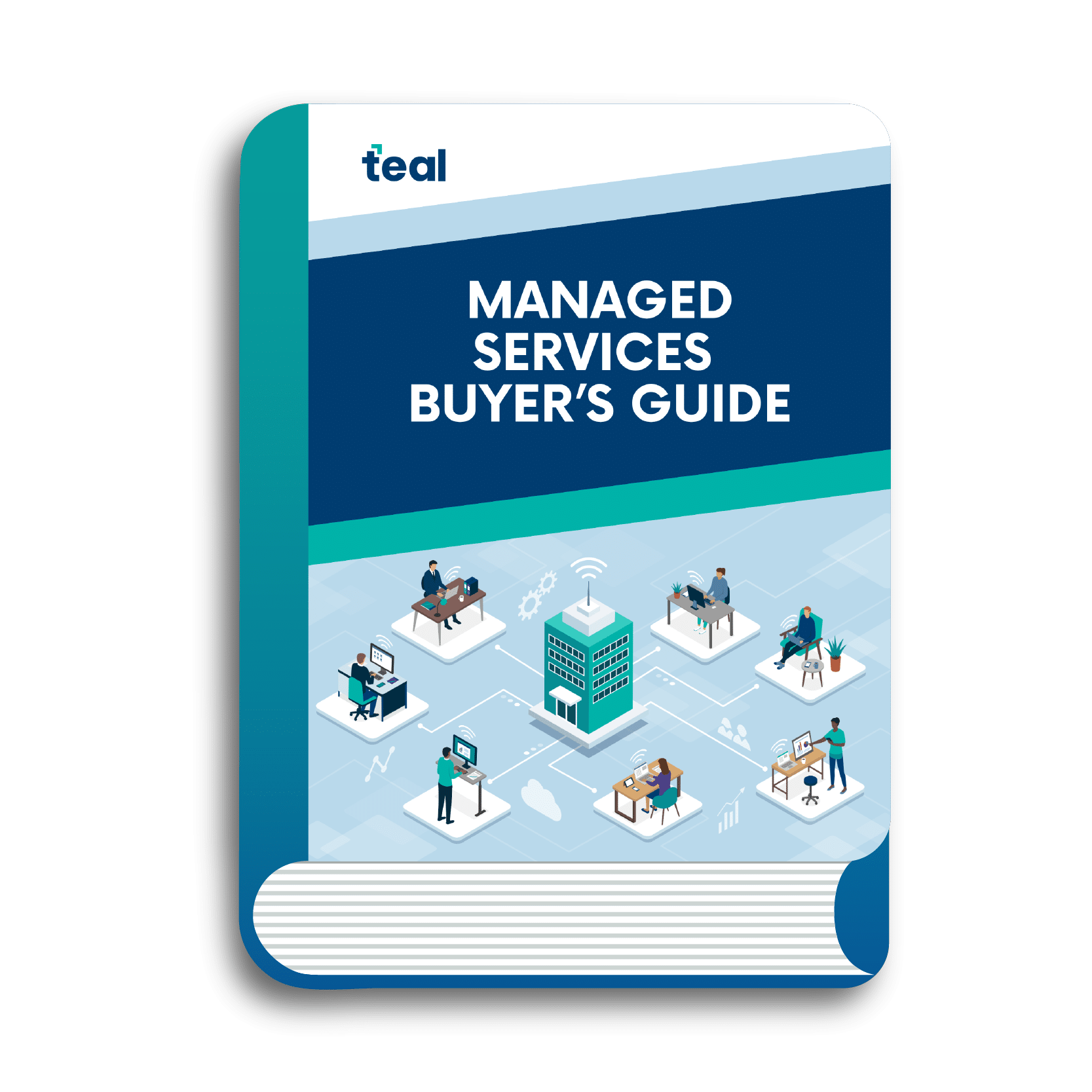
Not sure what to look for in an MSP? This buyer’s guide walks you through the questions worth asking before you sign anything.
Overcome This Challenge...
SMBs partner with managed services providers like Teal to gain access to strategic IT consulting – helping them achieve the perfect balance between digital innovation and risk management.
Call us today at (833) 367-8325 or schedule a quick, one-on-one consultation to learn more.